
Last Updated on April 21, 2026 by Lisa Keys
Achieving perfectly cooked roast beef has long been the holy grail for many home cooks. My mom never mastered it. Visions of dry, unevenly cooked roasts are daunting, often having me relegating this classic dish to professional kitchens. There is nothing worse than ruining an expensive cut of beef, but them days are over. Say hello to sous vide roast beef.
What is the sous vide method
Sous vide, French for "under vacuum," involves sealing food in airtight bags and immersing them in a precisely temperature-controlled water bath. This gentle and consistent heating method eliminates the guesswork and delivers unparalleled results, making a sous vide roast beef recipe not only incredibly easy but also exceptionally flavorful and tender.
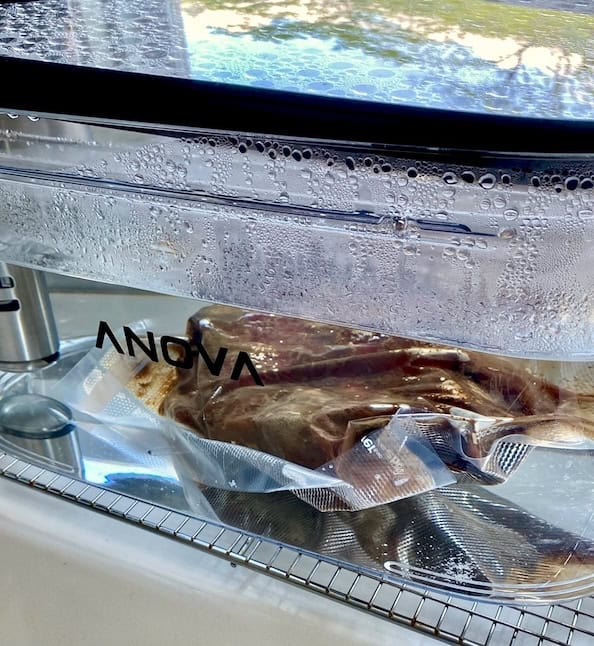
The beauty of sous vide lies in its simplicity. Unlike traditional roasting methods where oven temperatures can fluctuate and heat penetration is uneven, sous vide ensures the entire piece of beef reaches the exact temperature you desire. This eliminates the risk of overcooked edges and a raw center, guaranteeing a uniform level of doneness from crust to core.
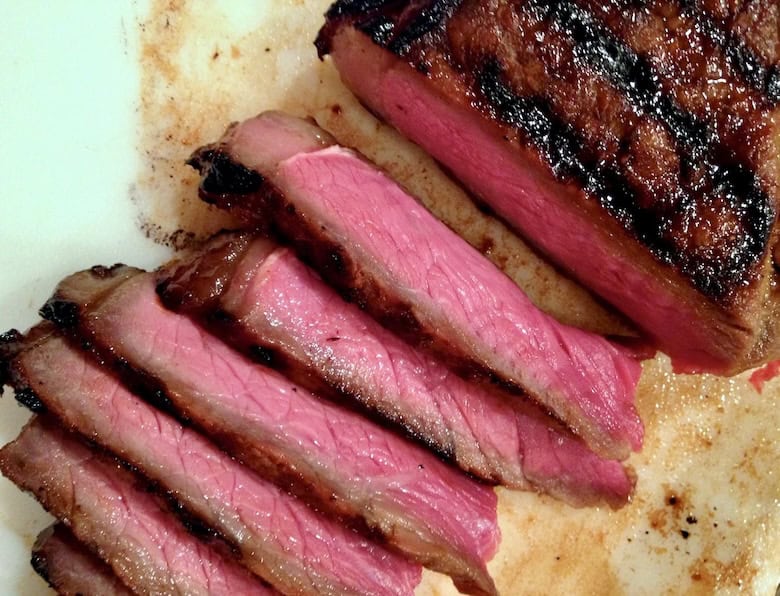
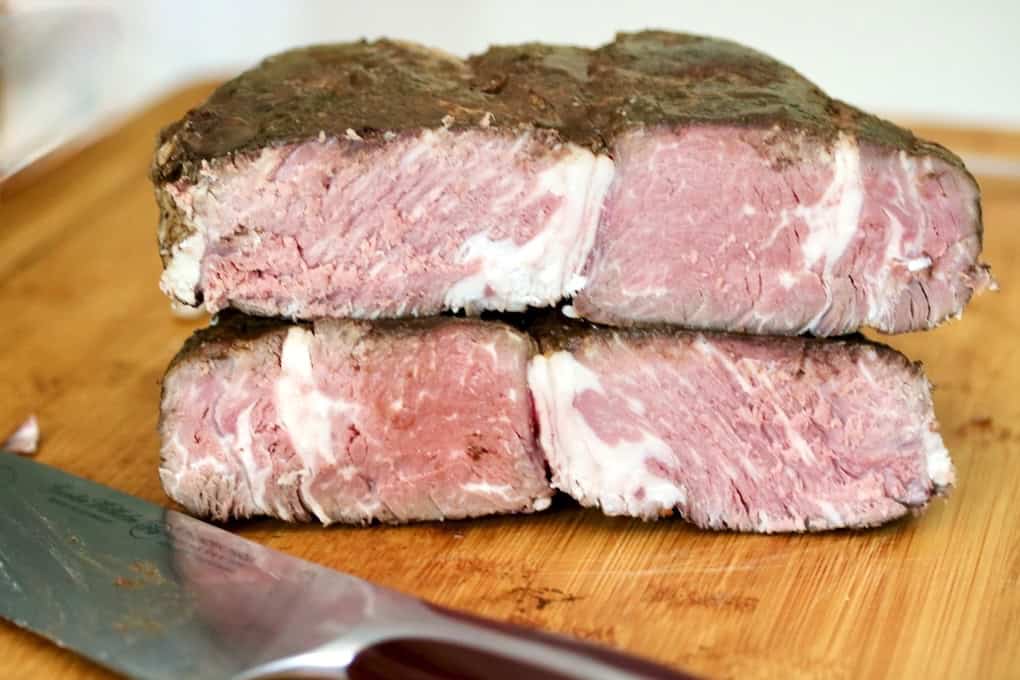
Chuck roast, a relatively inexpensive cut from the shoulder, is known for its rich, beefy flavor, but can often be tough due to its connective tissues. This is where the magic of sous vide cooking comes in. By precisely controlling the cooking temperature over an extended period, sous vide gently breaks down these tough fibers, transforming the chuck roast into incredibly tender and succulent meat. You can eat it like a steak or a pot roast or slice it thinly for a roast beef sandwich. And any leftovers will be great in this beef and mushroom pot pie.
How to cook sous vide roast beef
The process is remarkably straightforward:
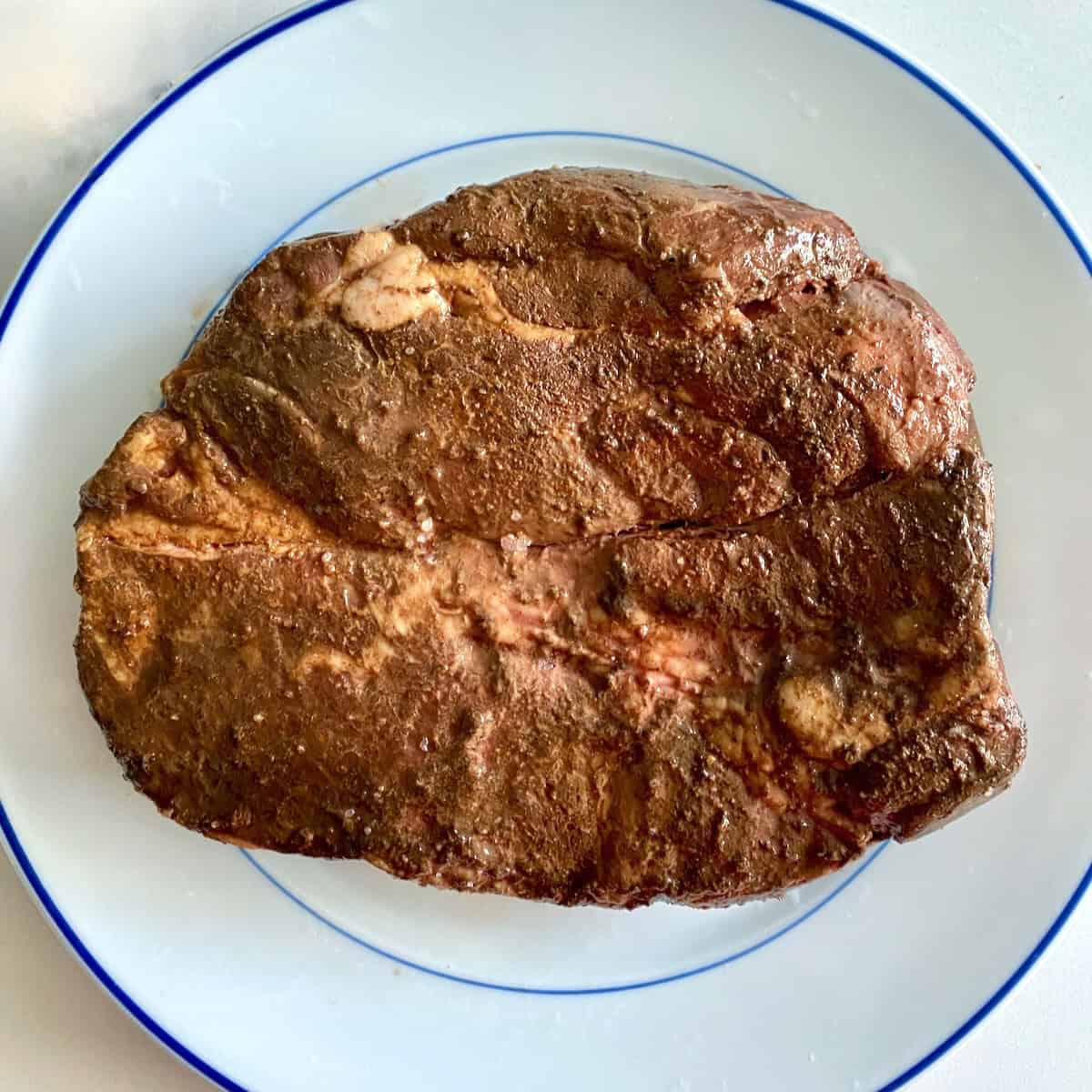
- Season and Seal: Simply season a chuck roast generously with your favorite herbs, spices, and aromatics. I just use salt and Worcestershire sauce. Then, vacuum-seal it in a food-grade bag or use the water displacement method to remove as much air as possible.
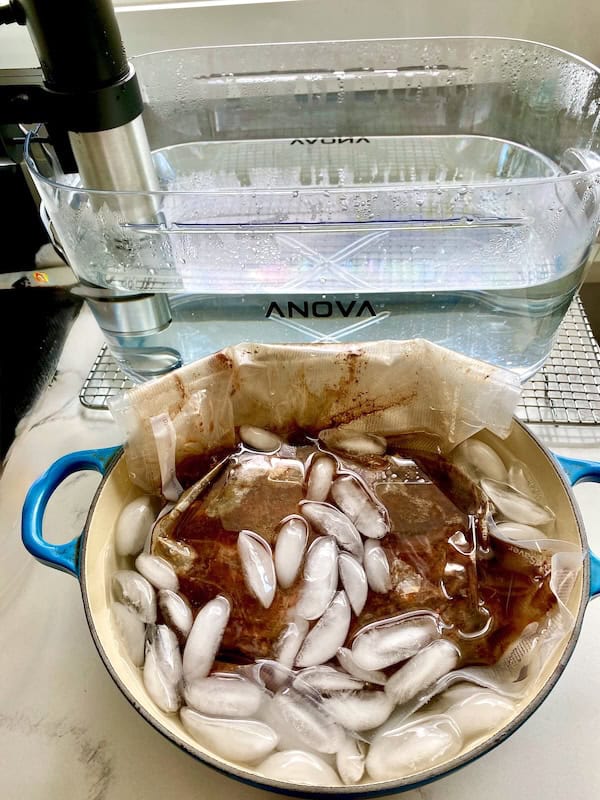
- Set it and Forget it : Submerge the sealed bag in a water bath maintained at your precise target temperature. For medium-rare, this typically falls between 130-135°F (54-57°C). A sous vide immersion circulator will maintain this temperature with unwavering accuracy.
- The Patient Wait: Depending on the cut of meat, thickness of your roast and the desired meat texture, the sous vide process can take anywhere from a few hours to 2 days. For a 2-3-inch (3 pound) chuck roast I cooked it for 44 hours. During this time, you are free to attend to other tasks, knowing your roast is cooking perfectly without constant monitoring. BTW, it uses minimal electricity to do such a long cook.
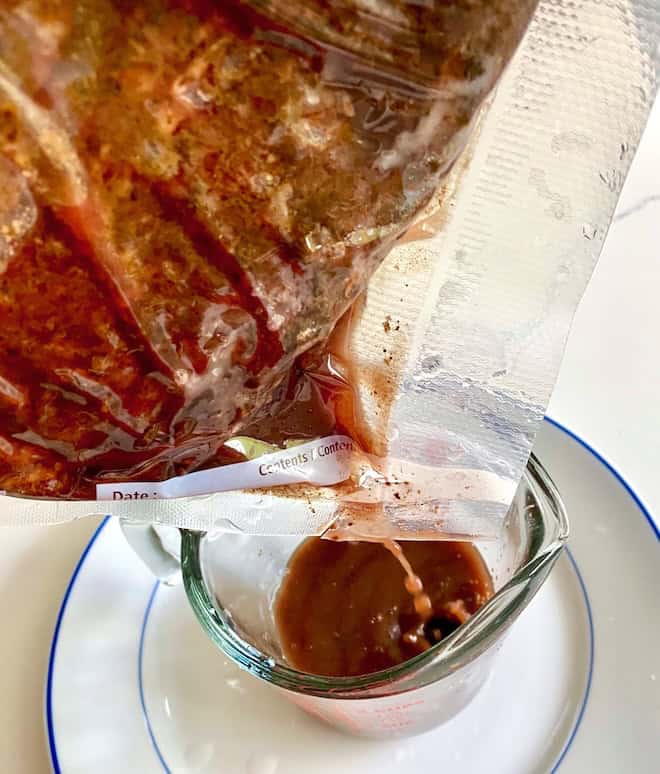
- The Final Flourish: Once the sous vide process is complete, you can either quick chill it for later use or remove the beef from the bag reserving the liquid to make a sauce or au jus. At this stage, it will be cooked to the exact internal temperature. However, it will lack the often desirable, but totally optional, browned crust. A quick sear in a hot skillet with oil or butter, or under a broiler, for a minute or two per side will create a beautiful Maillard reaction. This enhances both flavor and appearance. You can also sear on a hot grill.
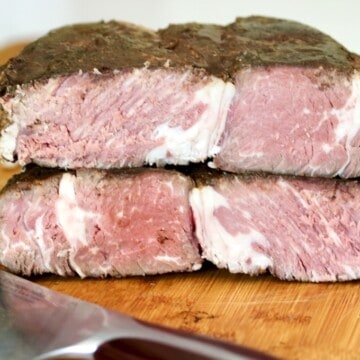
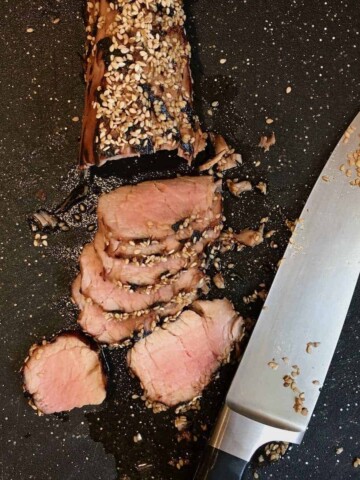
- Rest and Serve: Allow the seared roast beef to rest briefly before slicing against the grain. The result? Incredibly tender, uniformly pink, and exceptionally flavorful roast beef that will impress even the most discerning palates.
How does sous vide maximize flavor and tenderness
Beyond the ease of use, sous vide excels at maximizing both flavor and tenderness. The sealed environment traps the natural juices and aromatics, allowing them to infuse the meat throughout the cooking process. This results in a roast that is incredibly moist and intensely flavorful.
Furthermore, the precise temperature control allows enzymes within the meat to break down tough connective tissues over a longer period without overcooking the muscle fibers. This results in a remarkably tender and melt-in-your-mouth texture that is difficult to achieve with traditional roasting.
Sous Vide Roast Beef

Equipment
- 1 immersion circulator
Ingredients
- 1 (3-pound) chuck roast (about 2-3-inches thick)
- 1 ½ teaspoons kosher salt
- 2 tablespoons Worcestershire sauce
Instructions
- Heat water bath to 133F.
- Trim excess fat from chuck roast edges
- Season meat all over with salt
- Pour Worcestershire sauce in bottom of cooking bag
- Place roast in sous vide bag or double up ziplock bag if using water displacement method
- Vacuum seal bag or seal using water displacement method
- Place bag in water bath making sure it is completely submerged.
- Set timer for 44 hours and cover water bath vessel to prevent evaporation**
- When timer goes off, remove bag from water bath and let meat rest for 10 minutes, if eating immediately. Or submerge in ice water for 20 minutes before refrigerating for later use.
- Remove the roast from the bag reserving the cooking juices for an au jus.
- Slice and serve trimming away any excessive fat.
Notes
Nutrition
Tender cuts like tenderloin, ribeye, sirloin, and even tougher cuts like chuck roast (cooked for a longer duration at a lower temperature) work exceptionally well with sous vide.
While a vacuum sealer is ideal for removing all air, you can also use the water displacement method with a zip-top bag. Simply submerge the bag slowly, allowing the water pressure to push the air out before sealing.
You can easily reheat sliced meat in a quick dip of simmering beef broth or the au jus liquid from the cooking bag. If the meat is left whole and still vacuum sealed you can bring it back up to temperature using the sous vide method. Reheat at 133F. for 1 hour.
Yes you can. In its vacuum sealed pouch cool it down quickly in an ice water bath and then place in freezer for up to 3 months.

LSmith says
This sous vide roast beef looks tender and delicious! Can’t wait to try it!
Lisa Keys says
I love it for deli style sandwiches. A French dip sandwich in the making.
Louis Matino says
Looks amazing 🤩
Lisa Keys says
It's one of the easiest meals you can make. Thanks for the comment.